National News

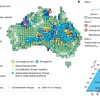
Map of Oz shows how plants and animals will need new homes

The Guardian newspaper writes: Australian animals and plants will increasingly have to find new homes in the coming decades due to climate change according to research used to create new maps of how local conditions are changing. Read the full story here.

World's Oceans Got a Lot Warmer In 2013

Global ocean temperatures rose dramatically last year, providing another strong sign that the oft-cited global warming "pause" or "hiatus" since 2000 has happened only at the surface – while the rest of the planet has been heating up at an increasingly rapid pace, writes The Weather Channel. Read the full story and easy-to-read graphics here.

Scientists have no idea what species this is!

CSIRO scientists have to classify a new species of giant jellyfish after a family discovered a 1.5m unknown jelly species washed up on a beach south of Hobart, writes ABC News Online.  Read the full story here.

Warm water manta ray in Tassie!

The world's largest ray species - usually found in warmer waters - has been spotted in Tasmania and logged on Redmap, writes The Mercury newspaper. Read the full story here.
Log what you see

Journalist Emma Carmichael takes a look at the citizen science behind Redmap. She interviewed Redmap's Dr Gretta Pecl and Victorian diver and Redmap member Mary Malloy. Read and listen to the interview here.

Are Dugongs hitching a ride south?

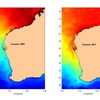
Western Australia has had its fair share of unusual sightings along the coast but could a dugong be part of the tropical menagerie enjoying our warmer waters?

Shrinking fish

A small increase in sea temperatures has led to a dramatic decrease in the size of fish, writes the Daily Mail. Scientists have found that some North Sea species -including haddock, whiting, herring and sole- have decreased in body length by almost a third over 38 years. Read the full Daily Mail story here.

Page 45 of 51

Redmap is funded by

Lead institutes