National News

Redmap in The Tasmanian Naturalist!

Citizen science is becoming an important tool for monitoring changes in the earth's vast oceans. And the traditional world of science is starting to take note.  Redmap has written an article for the journal The Tasmanian Naturalist!  The piece reviews how Redmap is collecting a long-term record of verified observations of out-of-range species that adds to the data available from traditional scientific surveys. Read the full article here.

A shark's tale

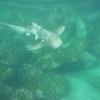
The coastal city of Newcastle is in the midst of a media frenzy, thanks to a string of shark sightings close to popular swimming beaches, writes the CSIRO. What's going on here? Read the article here.

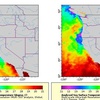
Ocean climate change hotspots mapped to help fishing industry adapt

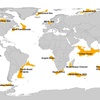
Researchers have mapped climate change hotspots in the world's oceans to allow better fisheries management and commercial fishing decisions, writes ABC News.  Australian scientists led by Dr Gretta Pecl [Redmap founder!] at the University of Tasmania's Institute for Marine and Antarctic Studies (IMAS) have developed an approach to help fishery managers and the fishing industry adapt. Read the full story here.

Assessing fish sensitivity to climate change

Redmap founder Gretta Pecl developed a method for rapidly assessing how sensitive to climate change our key commercial species are likely to be. In rapidly warming regions so much is changing - and fast - so we need quick methods to identify what species are most at risk in order to expend further research dollars wisely.


Climate change does not bode well for picky eaters

Gentoo and Chinstrap penguins evolved different diets that reduce competition for food so they can better co-exist. But a new study shows that only one of these species has a flexible diet that is more suited to the rapidly changing conditions in Antarctica. Read which penguin is less fussy in The Science Daily.

Warm oceans drive hottest year on record

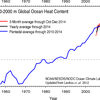
Unusually warm seas helped drive annual global temperatures to a record level in 2014 and are likely to ensure this year has a similarly hot start, writes the Sydney Morning Herald. Read the full article here.

To bleach or not to bleach?

Researchers examining the impact of climate change on coral reefs have found a way to predict which reefs are likely to recover following bleaching episodes and which won't, writes Science Daily. Read the full story here.

Page 37 of 51

Redmap is funded by

Lead institutes