With changing tastes and warming oceans, Japanese seaweed in danger
Kombu, a seaweed integral to Japanese cuisine, is under threat by changing tastes and warming oceans, writes The Washington Post. Read the full story here.

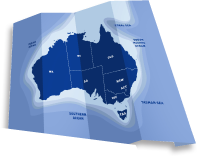
Kombu, a seaweed integral to Japanese cuisine, is under threat by changing tastes and warming oceans, writes The Washington Post. Read the full story here.
Marine ExChange are running a national survey of anyone who loves to fish, dive, boat, sail or just walk along the beach. Do the 2015 National Survey of Marine Users to be in the draw for thousands of dollars of great prizes! The survey will help researchers understand the if, how and why of public involvement in marine research. For more information, and to do the survey, click here.
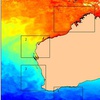
Consider yourself warned. We can expect a burst of supercharged warming when the pause in rising global temperatures finally ends, writes New Scientist. Read the full article here.
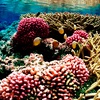
CBS news reports that warm waters in the tropical Pacific and Indian Oceans will spark widespread coral bleaching across the world this year. Read the full story here.
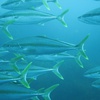
A report to be published Thursday in the journal Nature suggests that global warming may increase upwelling in several ocean current systems around the world by the end of this century, especially at high latitudes, and will cause major changes in marine biodiversity, writes Science Daily. Read how this may impact fisheries here.

Sardines, anchovies and mackerels play a crucial role in marine ecosystems, as well as having a high commercial value. However, the warming of waters makes them vanish from their usual seas and migrate north, writes Science Daily. Read the full story here.
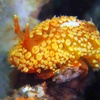
Climate change might be destroying corals with ocean acidification and forcing dolphins to change their range, but some species are actually benefiting from it. Warming ocean temperatures off the coast of northern California, for example, have triggered a population explosion of bright pink, inch-long sea slugs in tide pools along California’s central and northern coastline, writes the Discovery Channel News. Read the full story here.
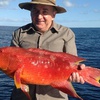
When it comes to immunisation, climate change or wind farms, people often form groups and reinforce irrational views, according to the ABC Science Show on Radio National. So why do the scientific facts not penetrate? Redmap features highly in this discussion with Annabel Crabb, Tanya Ha and Tory Shepherd as an example of communicating science by involving the community. Listen at around the 23 minute mark here.
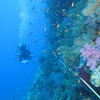
Research released this week shows the oceans are continuing to warm steadily despite an a slowdown in the rate of warming at the earth’s surface, increasing the likelihood of extreme heat undersea, writes The Conversation. Sadly, these changes could spell the end for large swathes of Western Australia’s underwater forests and much of the marine life that depends on them for food and shelter. Read the full story here.

Australian scientists have assessed how 35 common fish species are coping with climate change, finding that most have to deal with new conditions and many are moving towards polar waters to find suitable habitats, writes The Guardian. Research led by the University of Tasmania’s Institute for Marine and Antarctic Studies (IMAS) analysed the climate sensitivity of fish found off the south-east coast of Australia. Read the full article here.