
Amberjack and Yellowtail kingfish in Tasmania
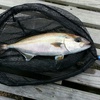
A recent paper was published by the Redmap team utilizing observations of Amberjack (Seriola durmerili) and Yellowtail kingfish (Seriola lalandi) in Tasmania...
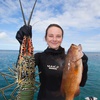
Fishers see amazing things and capture great moments in pursuit of their catch. The Redmap Fisher Photo Competition gives you the opportunity to share and celebrate your favourite fishing memories, with great prizes on offer for two winners in each category! Photos from all types of fishers are warmly welcomed.
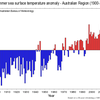
Wide-scale disruption from warming oceans is increasing, but they could change our understanding of the climate, writes The Guardian.
Tiny marine organisms capable of causing deadly infections in both human and also fish, are becoming more prevalent in North Atlantic coastal regions as ocean waters warm. Read the full story in Nature World News.
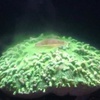
Coral researchers have for the first time captured the specific behavior of a coral as it's bleaching. While scientists have known for some time that coral bleaching occurs when the relationship between the coral and their Symbiodinium breaks down as ocean temperatures rise, new research show for the first time how this coral removes the algae. Read the full story in Science Daily.
Deadly marine bacteria are proliferating in warmer waters, prompting "unprecedented" outbreaks in the U.S. and Europe, a study finds. read more in The Huffington Post.
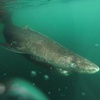
Greenland sharks live at least as long as 400 years, and they reach sexual maturity at the age of about 150, a new study reports. Read the full story at Science Daily.
John Fasullo and colleagues predict that satellites will detect accelerating sea level rise within the next decade. Read the full story in The Guardian.
When a deadly patch of warm water shocked the West Coast [of America], some feared it was a preview of our future oceans. Read the story in National Geographic.
The Gulf of Maine coastline, historically home to one of the richest shellfish populations in the US, is undergoing a dramatic change, with once-flourishing wild blue mussels all but disappearing, according to ecologists. Read the story at Science Daily.