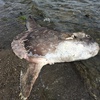
Fishy mystery on Derwent River beach
THE world’s heaviest species of fish has washed up on the shores of the River Derwent, prompting a call for beach combers to be on the lookout for more unusual sightings, writes The Mercury newspaper.

THE world’s heaviest species of fish has washed up on the shores of the River Derwent, prompting a call for beach combers to be on the lookout for more unusual sightings, writes The Mercury newspaper.
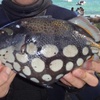
Steven 'Sealberg', a shark with a naughty nickname, and a wine bottle all made it onto Redmap’s annual Top 10 Oddest Sightings. This list is completely subjective. And mainly based on strange-looking species, odd photos or sightings with great stories behind them...
Citizen science is becoming an important tool for monitoring changes in the earth's vast oceans. And the traditional world of science is starting to take note. Redmap has written an article for the journal The Tasmanian Naturalist! The piece reviews how Redmap is collecting a long-term record of verified observations of out-of-range species that adds to the data available from traditional scientific surveys. Read the full article here.
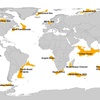
Researchers have mapped climate change hotspots in the world's oceans to allow better fisheries management and commercial fishing decisions, writes ABC News. Australian scientists led by Dr Gretta Pecl [Redmap founder!] at the University of Tasmania's Institute for Marine and Antarctic Studies (IMAS) have developed an approach to help fishery managers and the fishing industry adapt. Read the full story here.
Redmap founder Gretta Pecl developed a method for rapidly assessing how sensitive to climate change our key commercial species are likely to be. In rapidly warming regions so much is changing - and fast - so we need quick methods to identify what species are most at risk in order to expend further research dollars wisely.
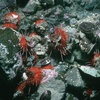
As climate change adds to the threat of extinction faced by many species, new research shows how sea urchins can adapt to the increasing temperature and levels of acidity in Antarctic waters, writes the Climate News Network. Read the story here.
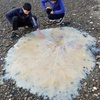
Redmap is all about collating and sharing marine observations by everyday Australians - here are some of the highlights from around Australia. Thanks to all the fishers, divers and beachcombers who sent Redmap photos of their uncommon sightings in 2014!
A half-a-million-dollar study on coastal communities dealing with the effects of climate change is being carried out by UTAS Institute for Marine and Antarctic Studies (IMAS), the CSIRO, and Murdoch University.
Dr Stewart Frusher from IMAS, who was leading the project, said St Helens in Tasmania, Bowen in North Queensland, and Geraldton in Western Australia were chosen for the study, which involved members of the community and professional fishermen.
Dr …
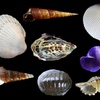
Snails aren’t best known for moving at anything faster than, well, a snail’s pace. Yet out in the oceans, a seismic shift in the ranges of species seems to be gathering pace, with snails and their relatives at the vanguard.
This edition reviews the Redmap data - including the Top 10 species logged on Redmap! Also read about molluscs on the move, the tropicalisation of Sydney Harbour and amusing names given to fish. Read the October Redmap newsletter.