Help scientists track how sea life respond to climate change
A recent article in The Conversation detailed how Redmap volunteers are helping scientists track movements in marine species around Australia's vast coastline. Read the article here.

A recent article in The Conversation detailed how Redmap volunteers are helping scientists track movements in marine species around Australia's vast coastline. Read the article here.
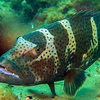
Last summer Victorian diver Paul Sorensen spotted a tropical-looking fish lingering in an abandoned shopping trolley under the Frankston Pier near Melbourne. It turned out to be a tropical species usually found near Queensland reefs.
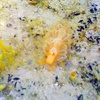
This photo of a nudibranch (a seaslug) was emailed between scientists in South Australia, Western Australia, New South Wales, Tasmania and finally the Northern Territory before it could be identified. Read why this rare Redmap sighting excited Redmap scientists.
The University of Adelaide says warmer oceans and higher CO2 levels will destroy sharks' hunting ability, making them smaller and weaker. Read the full story in SBS World News.
Check out another great citizen science project: Reef Watch. Reef Watch in South Australia provides free training to community volunteers to monitor temperate marine environments using non-destructive, internationally recognised techniques. Volunteers generate valuable scientific data that informs adaptive management for conservation of the marine environment. Read more here.
A new study by University of Tasmania researchers and international collaborators has found that a key element of future changes in the distribution of marine biodiversity resulting from ocean warming is not as closely related to local warming rates as previously assumed. Read more in the University of Tasmania News.
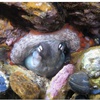
The world’s oceans are warming at an accelerated rate due to anthropogenic activities. Over 100 species have undertaken polewards range-shifts along the south-east coast of Australia with expected positive and negative impacts in the invaded southern communities. Read more about this hot topic by researcher Jorge E. Ramos and Redmap founder Gretta Pecl from the Institute for Marine and Antarctic Studies in the Ecological Society of Australia's Hot Topics …
Fancy yourself a bit of an artist? Check out the latest Redmap marine design competition.... (Closes November 5th 2015)
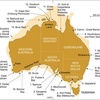
Aboriginal society has preserved memories of Australia's coastline dating back more than 7,000 years. Read the full story in Science Daily.

The Women Divers Hall of Fame™ honours and raises awareness of the contributions of outstanding women divers. WDHOF provides educational, mentorship, financial, and career opportunities to the diving community throughout the world. Scholarships are now being offered in dive medicine, marine conservation, marine biology, underwater archaeology, marine education, journalism, graphic arts, or photography. Training grants provide funding for diver and related underwater training and, for some awards, scuba equipment. Applications …