Why Global Warming Hits the Arctic Harder Than Anywhere Else
Explorer and marine biologist Enric Sala talks about Leonardo DiCaprio’s new documentary, Before the Flood. Read the full story in National Geographic.

Explorer and marine biologist Enric Sala talks about Leonardo DiCaprio’s new documentary, Before the Flood. Read the full story in National Geographic.
Help determine the migration patterns of Mahi Mahi by letting scientists from the University of NSW know when you catch them in NSW at https://www.surveymonkey.com/r/MahiMahiSurvey.

Terrigal's Marine Discovery Centre will host a marine and coastal environment event on October 27. And Redmap will be there to give you an update on all the latest unusual marine sightings! The event is organised by the University of Newcastle.
Dr Emily Ogier is a Research Fellow at the Institute for Marine and Antarctic Studies where she heads the FRDC’s Social Sciences and Economics Research Coordination Program. Originally a local from Tasmania, she embarked on her PhD in Western Australia looking at impacts of tourism, fisheries and aquaculture, before moving back to Tasmania where she now works on understanding the social and economic impacts of fisheries and aquaculture.
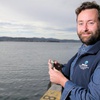
Dr Sean Tracey is a Senior Research Fellow at the Institute for Marine and Antarctic Studies with a real passion for the ocean and its inhabitants. His research career has spanned many areas, from global fisheries and food security to studying recreational fisheries. We had a chat to Sean about his research, climate change and what he likes to do in his (rare) spare time.
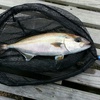
A recent paper was published by the Redmap team utilizing observations of Amberjack (Seriola durmerili) and Yellowtail kingfish (Seriola lalandi) in Tasmania...
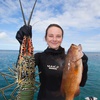
Fishers see amazing things and capture great moments in pursuit of their catch. The Redmap Fisher Photo Competition gives you the opportunity to share and celebrate your favourite fishing memories, with great prizes on offer for two winners in each category! Photos from all types of fishers are warmly welcomed.
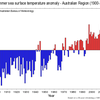
Wide-scale disruption from warming oceans is increasing, but they could change our understanding of the climate, writes The Guardian.

Tiny marine organisms capable of causing deadly infections in both human and also fish, are becoming more prevalent in North Atlantic coastal regions as ocean waters warm. Read the full story in Nature World News.
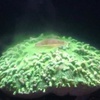
Coral researchers have for the first time captured the specific behavior of a coral as it's bleaching. While scientists have known for some time that coral bleaching occurs when the relationship between the coral and their Symbiodinium breaks down as ocean temperatures rise, new research show for the first time how this coral removes the algae. Read the full story in Science Daily.