Yellow bellied sea snake’s epic Tasmanian swim
A RARE reptilian visitor has turned up on Tasmanian shores after a marathon swim from warmer waters, writes The Mercury. Read the full story about the yellow bellied sea snake here.

A RARE reptilian visitor has turned up on Tasmanian shores after a marathon swim from warmer waters, writes The Mercury. Read the full story about the yellow bellied sea snake here.
Want to know more about climate change but not sure where to start looking for info? Then this easy-to-read booklet (by the Australian Academy of Science) answers many questions surrounding climate change in Australia. Get some answers here!

Scientists have observed the Atlantic (or Chesapeake) blue crab, a commercially important species, moving north of its native range into the Gulf of Maine, writes Science Daily. Read the full story here.

Through her successful projects Redmap (www.redmap.org.au), her latest Australian Research Council (ARC) Future Fellow project, and her participation in several other international projects as part of a 'Global Network of Marine Hotspots', Gretta's research is making a real difference to our understanding of the impacts of climate change on marine ecosystems in Tasmania and other 'hotspots' around the world. Read more about Dr Pecl on the University of Tasmania website.
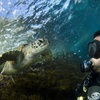
A new survey gauges the public's willingness to volunteer for marine science. The Marine Exchanges Survey is an Australian-first and aims to harness the power of ‘citizen science’. Observations from ocean users and beachgoers have enormous potential to increase knowledge about marine species along Australia’s coastal regions.

Oceans are gradually becoming warmer and more acidic as more carbon dioxide enters the atmosphere — two shifts that are altering the economic foundations of many coastal regions. In a new study published in Nature Climate Change, we and our colleagues set out to identify hotspots around the United States for ocean acidification, writes scientists in The Conversation US. Read the full story here.

Reef-building corals, algae, and other symbiotic marine organisms develop ecosystems that could withstand the impacts of climate change, reports the International Business Times. You can read about this new study here.

Kombu, a seaweed integral to Japanese cuisine, is under threat by changing tastes and warming oceans, writes The Washington Post. Read the full story here.
Marine ExChange are running a national survey of anyone who loves to fish, dive, boat, sail or just walk along the beach. Do the 2015 National Survey of Marine Users to be in the draw for thousands of dollars of great prizes! The survey will help researchers understand the if, how and why of public involvement in marine research. For more information, and to do the survey, click here.
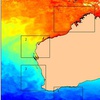
Consider yourself warned. We can expect a burst of supercharged warming when the pause in rising global temperatures finally ends, writes New Scientist. Read the full article here.