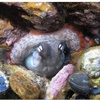
Help scientists track how sea life respond to climate change
A recent article in The Conversation detailed how Redmap volunteers are helping scientists track movements in marine species around Australia's vast coastline. Read the article here.

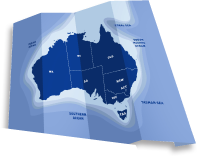
A recent article in The Conversation detailed how Redmap volunteers are helping scientists track movements in marine species around Australia's vast coastline. Read the article here.
A Gold Coast marine biologist is harnessing the power of social media in a bid to turn everyone into a citizen scientist. Facebook page Humpbacks and High-Rises (HHR) may only have just over 1,000 followers, but almost every one of those followers is engaging in whale watching research and conservation. Read more at The Brisbane Times.
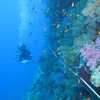
A new study by University of Tasmania researchers and international collaborators has found that a key element of future changes in the distribution of marine biodiversity resulting from ocean warming is not as closely related to local warming rates as previously assumed. Read more in the University of Tasmania News.
The world’s oceans are warming at an accelerated rate due to anthropogenic activities. Over 100 species have undertaken polewards range-shifts along the south-east coast of Australia with expected positive and negative impacts in the invaded southern communities. Read more about this hot topic by researcher Jorge E. Ramos and Redmap founder Gretta Pecl from the Institute for Marine and Antarctic Studies in the Ecological Society of Australia's Hot Topics …

The Atlas of Life in the Marine Wilderness asks the community to record their local marine species diversity in order to monitor the seasonal and annual changes in marine species diversity. Read more here.
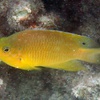
THE Ambon damsel (Pomacentrus amboinensis) have been found to need exposure to the natural environment to develop the ultraviolet (UV) facial markings reef fish use as a covert communication system to potentially avoid predators. Read more at Science Network Western Australia.
A University of Queensland scientist is calling for volunteer divers to photograph the underside of manta rays in waters off the Western Australian coastline and upload them to Facebook as part of a research project. Read more at UQ News.
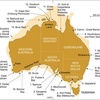
Aboriginal society has preserved memories of Australia's coastline dating back more than 7,000 years. Read the full story in Science Daily.

The Women Divers Hall of Fame™ honours and raises awareness of the contributions of outstanding women divers. WDHOF provides educational, mentorship, financial, and career opportunities to the diving community throughout the world. Scholarships are now being offered in dive medicine, marine conservation, marine biology, underwater archaeology, marine education, journalism, graphic arts, or photography. Training grants provide funding for diver and related underwater training and, for some awards, scuba equipment. Applications …
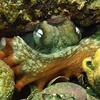
Climate change is bad news for many species. Environments are changing more rapidly than plants and animals can adapt to—or move out of—them. Octopuses, however, reproduce so quickly (and multitudinously) and have such short generation times, they are generally well primed to adapt and move. The common Sydney octopus (Octopus tetricus), for one, is expanding its range poleward as the surrounding oceans warm. But could a shift south actually eventually limit this …