
The wild face of climate change
Aquariums and zoos in the U.S. are promoting climate change awareness and reducing their own carbon footprint, as posted on National Geographic news.
A study of the ear bones of snapper revealed they can live for up to 36 years! This finding reinforces the need to protect their spawning grounds. Read the full story here from the South Australian Research and Development Institute (SARDI).
NSW fishers: can you ID the fish shown here? FISHO writer Mark Williams was out in his Hobie fishing for flathead on Lake Macquarie when he caught an unusual fish he hadn't seen before, writes Fishing World.
And the winners of the 2014 Redmap video competition are.....
Two young loggerhead turtles have been released back into the ocean at Coral Bay after they were found fighting for their lives on a beach 1,200 kilometres away, writes ABC news. Read the full story about the turtles, dubbed Jack and Sam, brought south by the strong Leeuwin current in WA.
'Citizen science' is a terrible and vague term for such a great idea, argues David Lang in Wired. Read the article here.
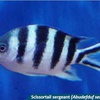
Researchers at the Department of Fisheries, Curtin University and the Western Australian Museum are asking divers in the Cape Naturaliste to Cape Leeuwin area to report any sightings of two damselfish: scissortail sergeant (Abudefduf sexfasciatus) and the Indo-Pacific sergeant (A. vaigiensis).
Are you planning on being on or in the ocean on June 8? If so, you can participate in eOceans Day! Simply report your marine observations to one of the many citizen science programs that are available - including Redmap if you see something unusual for a given area. Read on...
Watch these 35 fantastic entries into the Redmap video competition! Redmap asked Australians to make a 45-second video about Redmap and ocean warming. We received every type of video from mocumentaries to skits, animations, interviews and wonderful underwater footage.
Scientists from NASA and the University of California Irvine are warning that a group of melting glaciers in West Antarctica appear to have reached the point of no return, writes ABC's The World Today. Professor Eric Rignot talks to ABC radio about the 20 years of satellite data that maps the retreat of the glaciers. Read more here.