Tropical invasion in NSW beaches!
Scientists are shocked at the growing population of strange marine life in Sydney beaches, writes The Daily Telegraph. Read the story here.

Scientists are shocked at the growing population of strange marine life in Sydney beaches, writes The Daily Telegraph. Read the story here.
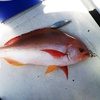
Recreational fisher Paul Szymanowicz had no idea of the identify of the unusual fish that turned up alongside some nice pinkies he caught while fishing deeper waters off Garden Island near Perth recently. It was a Pinjalo, a tropical snapper, a very rare visitor so far south. Read about this unusual catch in WA's Coastlines magazine.
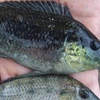
Report any aquatic pest you come across - like Tilapia (pictured), which impact native fish populations - to the NSW Department of Primary Industries using their online form.
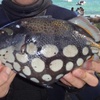
Steven 'Sealberg', a shark with a naughty nickname, and a wine bottle all made it onto Redmap’s annual Top 10 Oddest Sightings. This list is completely subjective. And mainly based on strange-looking species, odd photos or sightings with great stories behind them...
Citizen science is becoming an important tool for monitoring changes in the earth's vast oceans. And the traditional world of science is starting to take note. Redmap has written an article for the journal The Tasmanian Naturalist! The piece reviews how Redmap is collecting a long-term record of verified observations of out-of-range species that adds to the data available from traditional scientific surveys. Read the full article here.
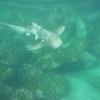
The coastal city of Newcastle is in the midst of a media frenzy, thanks to a string of shark sightings close to popular swimming beaches, writes the CSIRO. What's going on here? Read the article here.
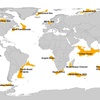
Researchers have mapped climate change hotspots in the world's oceans to allow better fisheries management and commercial fishing decisions, writes ABC News. Australian scientists led by Dr Gretta Pecl [Redmap founder!] at the University of Tasmania's Institute for Marine and Antarctic Studies (IMAS) have developed an approach to help fishery managers and the fishing industry adapt. Read the full story here.
Redmap founder Gretta Pecl developed a method for rapidly assessing how sensitive to climate change our key commercial species are likely to be. In rapidly warming regions so much is changing - and fast - so we need quick methods to identify what species are most at risk in order to expend further research dollars wisely.
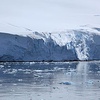
Warming ocean water is said to be melting the largest glacier in east Antarctica, underscoring climate change's assault on the continent's ice cover, writes the Sydney Morning Herald. Read the story here.
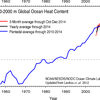
NOAA once again has had to rescale its ocean heat chart to capture 2014 ocean warming, writes The Guardian newspaper. Read the full article here.