Northern Territroy News

From mapping fish to counting koalas Australians are becoming passionate citizen scientists

“Citizen science brings scientists and the wider community together to work on large-scale scientific projects. It has played an important and celebrated role in the advancement of global knowledge.” This is the opening paragraph of an occasional paper released by Australia’s Chief Scientist Professor Ian Chubb, highlighting the importance of the estimated 130,000 Australians who are active in more than 90 citizen science projects.  The paper's lead author Associate Professor …

It's all in the genes: offspring cope better with climate change

In a world first study, researchers have unlocked the genetic mystery of why some fish are able to adjust to warming oceans, writes Science Daily. Researchers examined how the fish's genes responded after several generations living at higher temperatures predicted under climate change. Read the full story by the ARC Centre of Excellence in Coral Reef Studies here.

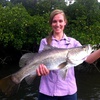
Barra spotted in Sydney Harbour!

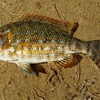
SNOW in the Blue Mountains and near freezing temperatures in Sydney didn't scare this barra, which was spotted over the weekend sunning itself in Sydney Harbour, writes Fishing World. Barramundi are one of Redmap's 'species of interest' to look out for - like the Redmap barra sighting pictured here. However, this sighting in Sydney Harbour could have more to do with a deliberate (and irresponsible) release. Barra prefer water temps …

Redmap recognised by Australia's Chief Scientist

Citizen Science in Australia recognised today as a major contributor to our knowledge through the release of an Occasional Paper from the Office of Chief Scientist of Australia - authored by Redmap founder Gretta Pecl and three other very passionate champions of citizen science in Australia.

Australia's army of citizen scientists

People power is bolstering scientific knowledge and discoveries in Australia, writes the ABC's World Today. More than 130,000 volunteers are now working as citizen scientists, helping to collect data for more than 90 research projects around Australia. And Redmap is highlighted as one of the groundbreaking  citizen science projects! Read more here.

The oceans are warming faster than climate models predicted

If you want to know how much “global warming” is happening, you really have to be able to measure “ocean warming”, writes The Guardian. That is because more than 90% of the excess energy coming to the Earth from greenhouse gases goes into the ocean waters.  Read more about ocean warming and the climate models that predict warming into the future.

As the oceans warm, wide-ranging species will have an edge

Marine species that already have large ranges are extending their territories fastest in response to climate change, according to new research from University of British Columbia and biodiversity experts from around the world (including IMAS scientists!).  The study is one of the first comprehensive looks at how traits--other than thermal niche--impact marine animals' ability to respond to climate change. It could help improve global predictions of how different species redistribute …

Page 30 of 61

Regional funding bodies

Regional supporters