Resources Menu


Fishing in Tasmania

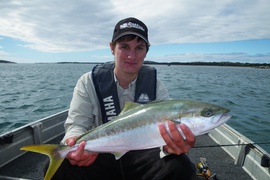
Find out more about who fishes, where they fish and what they catch. Learn more >


Tasmania's marine environment

The Tasmanian marine environment is recognised for the global significance of its marine biodiversity, with 60 per cent of marine species endemic (unique) to the state. Read more about the habitats and ecosystems of the Tasmanian marine environment. Learn more >
 

  • Tasmania's Marine Habitats Did you know that a lot of Tasmania's inshore areas have been mapped?
     
  • Major Currents that influence Tasmania Tasmania has three major currents systems which influence its coastal waters the Eastern Australian Current (EAC), the Leeuwin (and Zeehan) Current, and the Global Conveyor Belt.
     
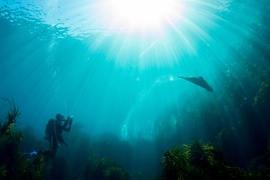
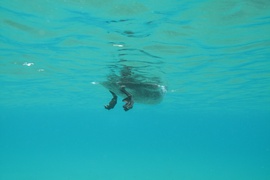
  • Diving in Tasmania - Coming soon! Tasmania’s marine environment is extremely diverse, and the water clarity during winter is truly amazing. Tasmania's marine animals range from magnificent southern right whales on the east coast to delicate sea dragons drifting near our giant kelp forests off the east coast. You can dive along side some of the highest sea cliffs in the southern hemisphere in search of seals, dolphins and other marine life. We have several very rare and special species of marine animals including Handfish. Our sponge gardens and under water caves are also truly amazing and unique.

Climate change and the marine environment

The Tasman Sea is a climate change 'hotspot' as this area is warming at a rate over three times the global average. This means that the east coast of Tasmania will be among the first areas that experience changes as climate change continues.

Follow the links below to learn more about climate change.

  • What is climate change?  We hear so much about climate change, projections and future scenarios. But what exactly is everybody talking about?
  • Ocean temperature Temperatures of the oceans are increasing as the ocean absorbs a lot of the excess heat in the atmosphere.
  • Rise in sea level  Most people expect that sea levels will rise due to ice sheets and glaciers melting at the poles, and they are right. However, a significant component of rising sea levels (around 57 per cent since 1993) is due to thermal expansion of water.
  • Ocean acidification The ocean has been absorbing between 40 and 50 per cent of the excess carbon dioxide in the atmosphere causing it to become 30% more acidic (lower pH) since 1750.
  • Downwelling and upwelling in the ocean Results of computer modelling show that winds are expected to increase with climate change resulting in an increase in upwelling in the ocean.

Impact of climate change on marine species

Global climate change is altering the conditions of the marine environment by increasing temperature, decreasing pH (acidification), and altering nutrient availability through changes to currents and upwelling patterns. How will our species and ecosystems respond to climate change? Learn more

Responses of marine species and ecosystems to climate change may be categorised by:

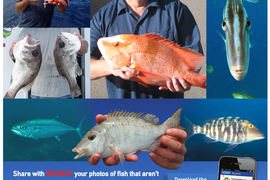
  • Changes to the range or distribution of species During the 1980s it became clear that something unusual was happening. Fish that were otherwise considered rare or unknown in Tasmania waters were being caught or observed more often. Around Tasmania several dozen species have shown changes in their distribution.
  • Changes to phenology and physiology   Phenology is a term used to describe the timing of life cycle events such as spawning or migrations. Physiology describes processes such as growth and reproduction. Often these lifecycles have evolved over great periods of time under very specific conditions and are triggered by changes in the natural environment, such as day length or seasonal temperature variations.
  • Changes to the structure and dynamics of communities Species don't occur in isolation. Our marine ecosystems are incredibly complex with many connections between species and with the habitats in which they reside. Changes in the distribution, abundance or timing of events in one species can have cascading effects through the ecosystem.

Teaching resources

Welcome educators! In our teaching resources section we have provided some interesting worksheets and lesson ideas to help inspire your students. Please read the background information provided, it tells the story of how Tasmanian scientists are addressing the challenges of climate change and contributing to science on a global scale. Register your class to WIN some fantastic prizes.
Learn more >

A little bit of science

How does a scientist find out what species are common to Tasmanian waters? Meet the divers that conduct underwater surveys of our marine environment. Learn more >